SANKOTSUYAMA is a natural burial site
where ashes are scattered and become part of the earth.
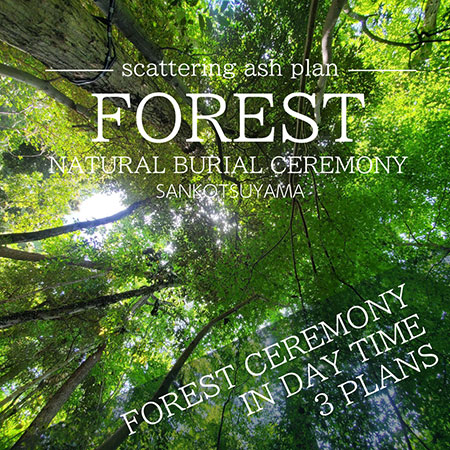
"Scattering ash in forest"
is An ancient Japanese funeral method
"Scattering ash in ocean"
A funeral method that travels around the world
All plans are for permanent memorial services
If you choose the plan to be present,
you can also visit the funeral at a later date.
Just send it from the post office.
We handle it all over Japan.
Don't keep it at home
It's best not to keep cremated remains in your home. Let me explain why. Remains do not possess a soul, nor do they radiate evil. However, the reason those left behind cannot let go of the remains is due to their attachment to the past. When "love" turns into "attachment," it becomes the energy of cessation. "Attachment" and "love" are different concepts. "Love" is the desire for the other person's happiness, based on trust and freedom, while "attachment" refers to clinging to someone out of one's own anxiety or sense of lack. The fundamental difference lies in the motivation, not the superficial difference in behavior. Keeping the energy of cessation around you is the same as decluttering. "Attachment" is the inability to throw away old clothes even though you no longer use them. "Attachment" is the desire to keep unwanted items close by. The benefits of decluttering include a cleaner home, reduced stress, improved concentration and self-esteem, better luck, and positive health effects. These benefits are the result of the peace of mind that comes from decluttering. It's good to cherish the past, replacing it with memories. However, what's problematic when this becomes an attachment? It's because we're subject to the energy of cessation. Remains are essentially the final form of a person's body after they've lived. Remains never change—they emit the energy of cessation. I understand the desire to keep the deceased close by. It's a fact that this feeling itself is a sign of kindness and love. It's wonderful to want to cherish the memories of the deceased forever. However, we should be aware that keeping the remains at home for a long period of time can affect us. Over time, we can unknowingly be subject to the energy of cessation. When we want to start something new, we feel hesitant. When we try to move forward with something new, things don't move smoothly. We gradually find ourselves feeling less cheerful and withdrawn. These are the effects of the energy of cessation. Everything requires a balance of yin and yang. Just as there is the sun and the moon, and there is day and night, they are both necessary. If the sun is yang energy, the moon is yin energy. If day is yang energy, then night is yin energy. Remains have yin energy. Yin energy means stillness, end, rest, and cessation, and since remains are a "body that has completed its function," they have yin properties. This is not to say that remains are bad. However, it is certainly best to avoid placing things that emit yin energy in living spaces. This is why homes with abundant sunlight are preferred over those without. Therefore, we believe it is best for remains to remain in their proper place.
The proper place for ashes is in nature. A place where the seasons change, where they are quietly purified, and where they can return to nature is the place they belong. A place where the wind blows and the rain moistens. A place where day and night are felt, illuminated by the sun and moon, is the most appropriate place. Humans are originally a product of nature. Our bodies are vessels borrowed during our lifetimes. It makes the most sense to return vessels that have completed their purpose to nature. All things are constantly changing. All things should change. Everything will continue to exist on this earth forever, changing as it does. Our bodies are also nothing but a part of nature. Once their purpose is fulfilled, they should be returned to nature and turn to soil. Our feelings in mourning the deceased are wonderful. However, rather than stopping the natural order of things based solely on our feelings, we should return them to nature. This is the way it should be. This is the best way to honor the deceased. How does returning ashes to nature change us? For example, you might feel like your home is brighter. The breeze blowing through the house brings a refreshing feeling. Things that were previously stagnant start moving miraculously. It's easier to attract good encounters and opportunities. You'll surely feel these changes for yourself. By letting go of old energy, fresh energy will flow more easily, improving your luck. You can leave the ashes for as long as you like, whether it's the 49th day or the first anniversary. There's no set length of time, so you can leave them there until you've sorted out your feelings. However, you shouldn't leave them there for so long that you forget about their presence in the house and take them for granted. Coming to terms with your feelings and moving forward with a positive attitude is surely what the deceased would have wanted. Living life with a positive and cheerful outlook is the best memorial service.
Trend of cemetery closures
According to a survey by the Ministry of Health, Labor and Welfare, the number of reburials (closing a grave or relocating the grave and transferring the remains to another memorial site) has been steadily increasing since 2010, exceeding 120,000 cases in fiscal year 2019. Grave closures are largely influenced by social factors, such as the increasing trend toward nuclear families, fewer new children being born, an increase in lifelong single-parent couples, an increase in childless couples, and an increase in urban populations and migration from rural areas. Consequently, many people cite specific reasons for closing their graves, such as "no one to take over," "the grave is far away," and "not wanting to burden their family by leaving it behind."
In the past, graves were passed down from parent to child, with the eldest son in particular being expected to look after the ancestral grave. However, in some families, if only girls are born or if the girls and children marry, there is no one to take over the grave. Even if there is an eldest son, he or she often lives in the city, making the maintenance of the grave near the family home a burden. There are also cases where parents willingly choose to close their graves, hoping not to burden their children with the matter in the future. It's also said that the relationship between temples and parishioners has weakened in recent years, and as grave closures have become more common throughout society, people are becoming less resistant to the idea of closing their graves. People who move from rural areas to urban areas are increasingly closing their rural graves and moving them closer to their current residences. The traditional idea of preserving graves for generations is also changing. Rather than maintaining a distant grave that can only be visited occasionally, people are choosing to close their graves and have a new one closer to their home, which allows them to visit regularly, leading to even greater ancestral memorial services.
How to close a grave
While there are professional grave closing companies available, you can cut costs by doing it yourself whenever possible. It's not difficult. The steps for grave closing are as follows:
1. Consult with relatives
2. Consult with the current cemetery or temple
3. Decide on a new location
4. Ask a stonemason to dismantle the gravestone
5. Get a "Reburial Permit" from the city, town, or village office where the cemetery is located
6. Remove the remains
7. Ask the stonemason to dismantle and remove the gravestone
8. Clear the cemetery and return it to the deceased
9. Hold a memorial service for the remains at the new location
The cost of closing a grave is mainly determined by the cost of removing the tombstone and purchasing a new one. While it's possible to remove a gravestone through consultation with a stonemason, it's best to consult with the temple first, as temples often have designated partners. The cost of removing a gravestone varies depending on the location, size, and region, but is typically around 100,000 yen per square meter. Consider getting a quote from a stonemason. When ending your parishioner relationship with a temple, you may be charged a temple separation fee. This is a token of gratitude, like a donation, to the temple, and the amount varies greatly depending on the length and depth of your relationship with the temple. The temple separation fee is not a legal obligation that requires payment. This website has compiled a map of stonemasons by city, town, and village to help you close a grave as cheaply as possible. We also provide a map of funeral homes for those who do not own a grave and need to mourn their loved ones. Please feel free to use this service if you are considering closing a grave and having a natural burial.
Expanding worldwide
Natural burials, where ashes are returned to nature, are becoming increasingly popular around the world. The style of burial in an urn with a grave is unique to Japan. Thailand is a devout Buddhist country, but does not have a grave. All cremation is followed by scattering of ashes. Religions originating in India, including Buddhism, Hinduism, and Jainism, all follow the cremation-scattering process. Christianity, the world's largest religion, has encouraged burial practices, but in the United States, the share of burial practices has declined, and the trend toward cremation-scattering is gaining momentum. In the UK, scattering of ashes in forests seems to be the most common practice, but ashes are also sometimes scattered in places like the River Thames in London. In European countries such as Germany and Switzerland, burials are often performed at the base of trees in forests rather than building cemeteries in the forest. There is a growing trend toward using natural forests as burial sites, rather than planting trees in cemeteries. The fact that the forest where we normally walk has become a burial site reminds us that death, which eventually comes, is not something special or something to be feared. Sweden, known as the world's leading country in ashes scattering, offers free scattering of ashes in the nationally promoted "Forest of Remembrance, Minneslund." Countries like China and Korea, where Confucian teachings are deeply rooted, once had a "burial culture," but are now promoting cremation followed by scattering of ashes nationwide. Looking around the world, the trend toward natural burial scattering seems unstoppable in an era of population explosion. It may be time for each of us to consider what we will do with our graves in the future.
You can also visit the forest.
The scattering of ashes at SANKOTSUYAMA is characterized by its "natural burial in the forest for eternal memorial services." Did you know that scattering ashes in the forest is not a new practice, but rather an ancient Japanese mourning method? "Scattering ashes in the forest" is a natural burial that has existed in Japan since ancient times. As the phrase "return to the earth" suggests, it is an ancient method of mourning in which the body becomes part of the earth again and circulates.
Poems about scattering ashes appear in the Manyoshu, but it seems that scattering ashes in the mountains was a popular method of burial until the modern-day "ordinary graves" became common. From the Nara to Heian periods, records remain of not only ordinary people but even the emperor scattering their ashes in the mountains after cremation. These records are also found in the Heian period history books "Shoku Nihongi" and "Manyoshu." It wasn't until the Edo period that scattering ashes declined and the current style of ordinary graves became popular, which is thought to be due to the shogunate's temple parish system. In modern times, scattering ashes is gaining renewed recognition as a natural funeral method. Scattering ashes is legal. This return-to-nature approach is gaining attention not only in Japan, but around the world.
Attitudes toward graves are changing around the world. There seems to be a growing belief that treating natural forests as burial sites, rather than planting trees in cemeteries, contributes more to the sustainability of the Earth. This represents a movement toward recognizing death as a natural part of everyday life, rather than treating it as a special ritual. Rather than enshrining the deceased as special beings, the idea that "even if the body is returned to nature, the spirit remains connected" seems to be gaining popularity. While scattering ashes is permitted in British forests, ordinary people also enjoy taking their dogs for daily walks there. This may help surviving family members avoid feeling lonely.
Scattering plan in forest
【Forest scattering plan】
At SANKOTSUYAMA, we recommend scattering ashes in the forest. Since you can visit the forest grave at any time afterward, please understand that it's a place where you can visit your deceased loved one if you ever feel like it. Scattering ashes in the forest ensures that you never lose your emotional refuge. Unlike ocean scattering, scattering ashes in the ocean can leave you feeling lonely and empty, as if you've been separated forever. Even after closing your grave, scattering ashes in the mountains is a way to ensure you don't lose your emotional refuge. While there are no gravestones or monuments at the scattering site, you can still recognize your loved ones as being in the forest. At Scattered Ashes Mountain, we value not just scattering ashes, but also holding a heartfelt funeral ceremony.・・・
At SANKOTSUYAMA, natural burials also include "ocean scattering." Scattering ashes at sea is a global trend. It's already popular not only in Japan but around the world. The world is currently experiencing a population explosion, resulting in a serious grave shortage. Traditional funeral practices across religions and sects are gradually changing, and mourning culture seems to be shifting to an era in which each family member can process their feelings in their own way. While grave closures are becoming more common nationwide in Japan, one of the benefits of scattering ashes is that there are no follow-up costs. While understanding of scattering ashes remains is still limited in Japan, the number of natural burials using scattered ashes continues to grow.
Many famous people and celebrities have already had their ashes scattered at sea. Many famous people and celebrities have had their ashes scattered, including Yujiro Ishihara, Shintaro Ishihara, Yasushi Yokoyama, Nobuko Otowa, Shintaro Katsu, Sadako Sawamura, Tantan Izumi, Kanako Fukaura, Chu Arai, Hide from X Japan, Hideyo Amamoto, Ramo Nakajima, Masaru Nashimoto, Hideyuki Fujisawa, Danshi Tatekawa, and Kaneto Shindo. Overseas, many famous people have had their ashes scattered, including Mahatma Gandhi, John Lennon, George Harrison, Janis Joplin, William Boeing, Vivien Leigh, Zhou Enlai, Deng Xiaoping, Albert Einstein, Ingrid Bergman, Friedrich Engels, Maria Callas, Edwin Rice Shower, River Phoenix, and Jacques Mayol.
"Ocean scattering" involves scattering powdered ashes at sea, and is often requested by people who loved the ocean. Another benefit is that there are no maintenance costs like with a grave. For this reason, it is not uncommon for the deceased to request scattering of ashes while they are still alive, as they do not want to cause trouble for their family. The ashes that are washed ashore will then travel around the world on ocean currents. Although it may feel a little lonely for the family, scattering at sea is a way of sending off the deceased as they embark on a new journey.
Scattering plan in ocean
【Ocean scattering plan】
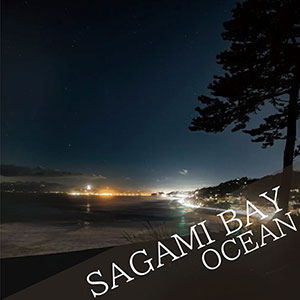
The unique feature of the "Ocean Scattering" ceremony at SANKOTSUYAMA is that the scattering ceremony is held at night. The ocean at night has a sadder, more melancholic feel than during the day. The magical moonlit night ocean in particular makes for a memorable funeral ceremony. The ocean is constantly changing, showing many different expressions, and the ever-changing ocean seems to reflect our hearts. If you send off your loved one by scattering their ashes at sea, you will be able to remember the deceased every time you look at the ocean. ...・・・
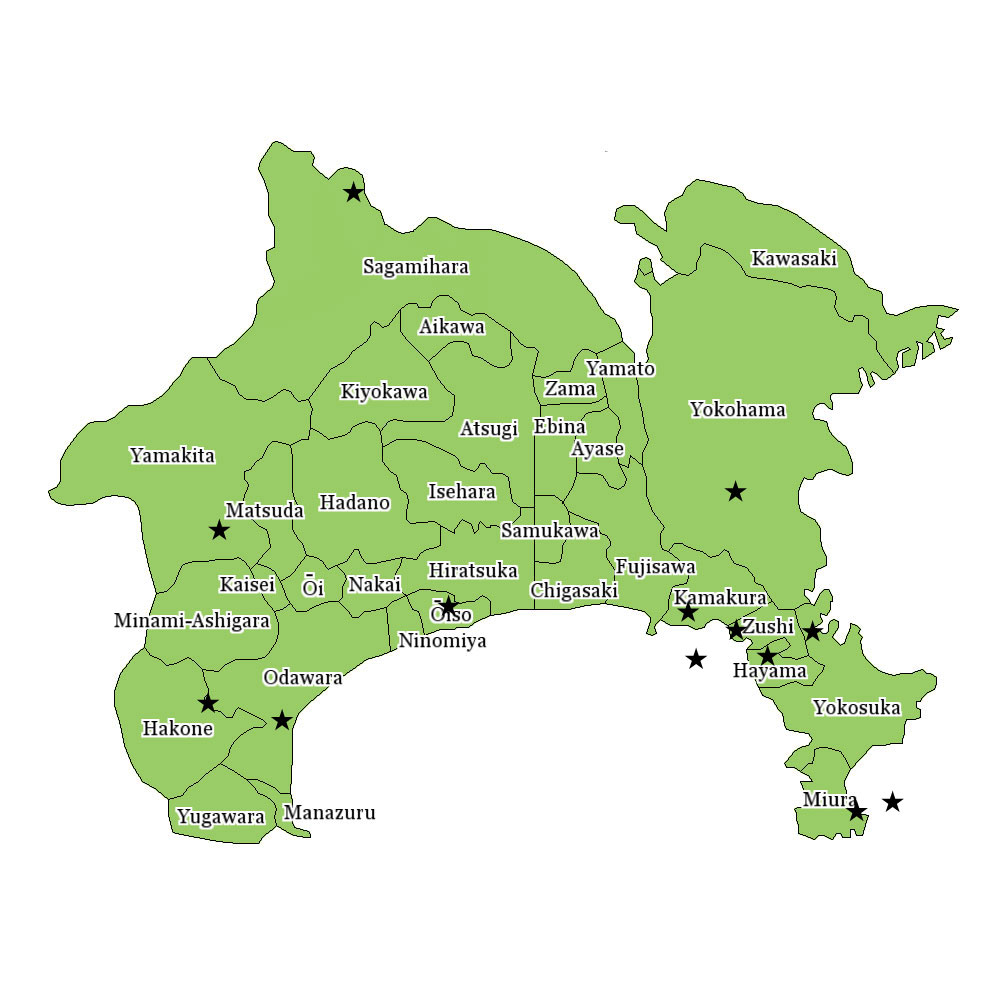
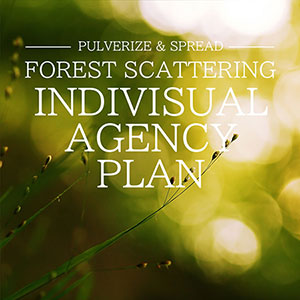
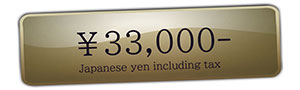
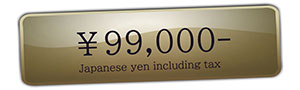
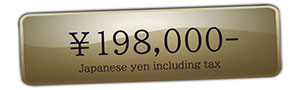
SANKOTSUYAMA's "natural burial" service focuses on natural scattering in the Shonan area, known as the "holy land of ashes scattering." However, you can also choose the scattering location more precisely. For "forest scattering," we offer scattering in a number of forests in Yokohama, Yokosuka, Miura, Kamakura, Zushi, Hayama, Oiso, Odawara, Hakone, Yamakita, and Sagamihara. If you specify, we can scatter the ashes in your chosen forest. All land is owned by our company, so it can be used for generations to come. Our "FOREST SCATTERING PLAN" include three types: "COLLECTIVE FOREST SCATTERING AGENCY PLAN", "INDIVISUAL FOREST SCATTERING AGENCY PLAN" and "FOREST SCATTERING CELEMONY ATTEND PLAN". The affordable "COLLECTIVE FOREST SCATTERING AGENCY PLAN" is a simple plan that simply involves sending the ashes via Yu-Pack. The "INDIVISUAL FOREST SCATTERING AGENCY PLAN" allows you to leave the funeral arrangements to us, allowing you to choose your preferred scattering location. With the "FOREST SCATTERING CELEMONY ATTEND PLAN" , you will be able to attend the local scattering ceremony. However, even after scattering, you can visit the site at any time, 365 days a year, allowing you to use the site just like a regular grave. Unlike ocean scattering, forest scattering allows for true "return to the earth." All "Forest Scattering" plans are natural burials with perpetual memorial services. Unlike typical "tree burials," the remains are not transferred to a communal grave after a certain period of time. There are no subsequent costs, such as management fees, so you can rest assured. Regarding the specific scattering location, please note that we do not provide detailed information on our website that could identify the location due to concerns about negative publicity. Furthermore, with the "OCEAN SCATTERING PLAN" , we scatter ashes in Tokyo Bay from the Miura Peninsula and Sagami Bay from the Shonan area. We offer three "OCEAN SCATTERING PLAN", "COLLECTIVE OCEAN SCATTERING AGENCY PLAN", "INDIVISUAL OCEAN SCATTERING AGENCY PLAN" and "OCEAN SCATTERING CELEMONY ATTEND PLAN" . The unique feature of the "Ocean Scattering" ceremony at SANKOTSUYAMAn is that it is only held at night, after sunset. Unlike the daytime sea, the "Ocean Scattering" takes place in the dark, creating a mystical atmosphere. In any case, since this is the final resting place of the deceased, we believe that a quiet environment where they can rest in peace is desirable. If you have a preference for the scattering location, please let us know.
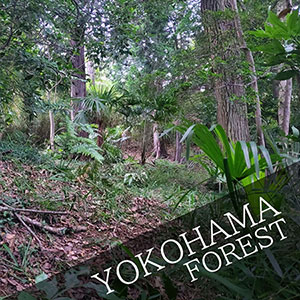
◆Scattering ash in Yokohama forest
The scattering spot in the Totsuka area of Yokohama is easily accessible from Tokyo, allowing you to visit the grave at any time. Yokohama is characterized by scattered hills scattered amongst its ・・・
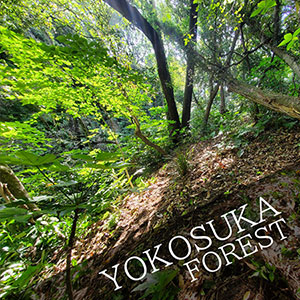
The scattering site in the Taura area of Yokosuka City is conveniently located by train. It's only a few minutes from the station to the site, so we recommend the "attended scattering plan," which allows for a visit after・・・
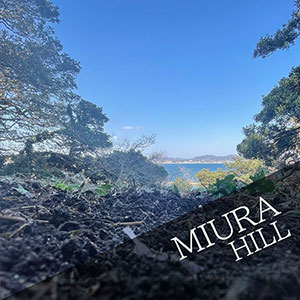
The Miura scattering spot is located on a hill overlooking Kaneda Fishing Port on the Miura Peninsula, offering a magnificent view of Tokyo Bay. The Miura Peninsula boasts relatively cool summers and mild ・・・
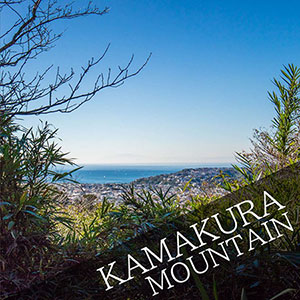
The scattering spot in Kamakura City is located in the Kamakurayama area, which is famous as a place for celebrities. On the way to the site, you can see the spectacular views of Sagami Bay and Enoshima. Kamakura・・・
This is a scenic scattering spot with a great view of Enoshima and Mt. Fuji. You can reach the site with the feeling of a light hike. It takes about 30 minutes to get there after passing through a residential area・・・
The scattering site in Hayama can be accessed by car from the residential area right up to the site. The fan-shaped plateau sandwiched between mountains is called a "Yato," and it is located at the very end of ・・・
Oiso is located in the central south of Kanagawa Prefecture, with Sagami Bay to the south and hills such as Mount Koma and Mount Takatori to the north. The climate is mild due to the influence of the warm currents ・・・
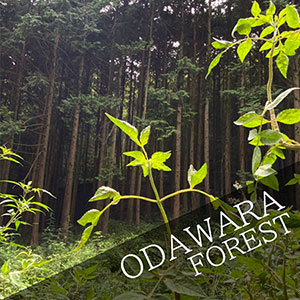
The scattering spot in Odawara City is in the Iryuda area. Iryuda is a station on the Hakone Tozan Railway, but it is easily accessible from the city center by transferring from Odawara on the JR Shonan-Shinjuku Line・・・
The area around Tonomine, where the scattering spot is located, is a 566m high mountain on the border between Odawara City and Hakone Town in Kanagawa Prefecture, and is one of the ancient outer rims of ・・・
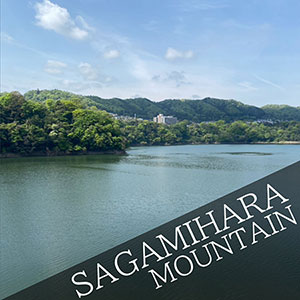
Sagamihara is a designated city in northern Kanagawa Prefecture. The scattering site in Sagamihara is located in Midori Ward, Sagamihara City. The Midori Ward area of Sagamihara City is home to five artificial・・・
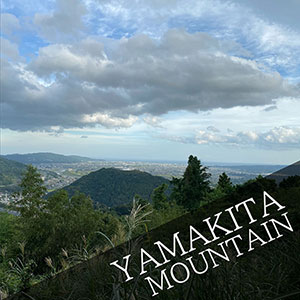
The mountain in Yamakita is a scattering spot where you can see the cityscape of Odawara and Sagami Bay in the distance. It is a place where you can objectively observe human activities while being surrounded ・・・
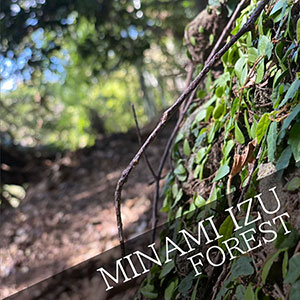
The scattering spot in Minamiizu is located in the southernmost area of the Izu Peninsula. The Minamiizu area is characterized by its spectacular scenery and history. Blessed with a warm climate, this area still retains・・・
Marine scattering involves scattering ashes in the Shonan Sea, known as Japan's most famous tourist destination. Many famous people have had their ashes scattered in Sagami Bay, which stretches out near Shonan. ・・・
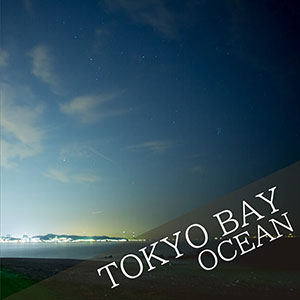
Tokyo Bay has a long history as a place where ashes are scattered. It is also in Tokyo Bay that the spirits of the Pacific War heroes, such as Hideki Tojo, are buried. This plan involves scattering ashes off the coast・・・
At SANKOTSUYAMA, we offer discounts for additional scattering of ashes for family members, pets, and ancestors. In addition to scattering the ashes of the deceased, you can also scatter the ashes of other family members, such as ancestors and pets, at the same location. If other family members pass away later, you can scatter their ashes in the same location at a discounted price. We also offer scattering of non-human pets, including dogs, cats, and all other living creatures. We also offer discounts for old remains of ancestors discovered during grave closings. Our Additional Discount Plan strives to offer the lowest prices. We offer a discount on the listed price for the second and subsequent bodies. If you choose theINDIVISUAL SCATTERING AGENCY PLAN or the SCATTERING CELEMONY ATTEND PLAN, you will receive a discount from the listed price. Discounts do not apply to the COLLECTIVE SCATTERING AGENCY PLAN.
Want to know more!
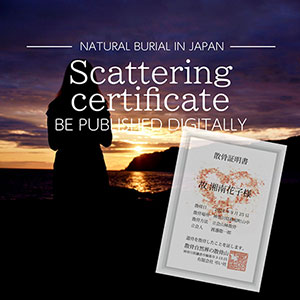
If you are considering natural burial with scattering of ashes at Scattered Bone Mountain, we have compiled information on the scattering ceremony, scattering certificate, frequently asked questions, and a comparison of plans.
CEREMONY PROGRAM
CERTIFICATE
FLOW
FAQ
COMPARISON
ALL OF JAPAN
REVIEW
COMPANY PROFILE
Related services and
End-of-life support
At SANKOTSUYAMA, we offer natural burial services, including "forest scattering" and "ocean scattering," and we also offer additional options. While we typically ask you to send the ashes in advance for the pulverization process, we can also collect them in our private vehicle without mailing them. We will come to your designated location, such as your home or a crematorium. We also offer temporary storage for ashes if circumstances prevent you from keeping them at home. We also offer services for storing memorial tablets and cremating personal belongings. You can also choose to return a portion of the ashes to keep as a memorial service, rather than scattering them altogether. At Scattered Bone Mountain, we value your feelings, so please let us know your requests. Below are our main additional optional services.
"Shukatsu" (end-of-life planning) is "preparation for the end of one's life." It certainly aims to avoid causing trouble or hardship to those around oneself after one's death. At the same time, "shukatsu" can also be seen as "preparation for a more fulfilling life." "Shukatsu" can also mean objectively reviewing and organizing everything around oneself, including "selecting what one really wants to do," "reassessing one's relationships," "making memories," "reassessing one's hobbies," and "reassessing one's lifestyle." This is nothing less than "facing oneself." By facing oneself and recognizing what one truly needs and what one doesn't, one can make the rest of one's life meaningful. Many people are now viewing "shukatsu" (end-of-life planning) in a positive light. As part of this, pre-death organization, closing one's grave, and closing one's Buddhist altar are also being considered part of "shukatsu." It may be necessary to consider the opinions of one's family when making these decisions. "Shukatsu" can reduce the burden on loved ones by organizing one's assets and considering desired memorial services. When choosing a temple, cemetery, or ossuary, it's important to carefully consider the location, accessibility, and cost to ensure your family won't be inconvenienced after you're gone. At Scattered Bone Mountain, we offer a variety of services for sorting belongings, closing graves and Buddhist altars, organizing your belongings while you're still alive, and preparing for your end. Rather than leaving your belongings to the professionals, we believe entrusting them to a professional service will clear your mind and clear your mind. We also offer services for cremating belongings, photo albums, and mementos you can't bear to throw away, as well as purchasing and disposing of unwanted Buddhist altars, accessories, and Buddhist statues. Finding time to visit a grave can be challenging given your busy schedule. On the anniversary of your death, our staff can visit the grave on your behalf, offering heartfelt prayers, offering flowers, and reading letters.
◆Tranceportation of remains
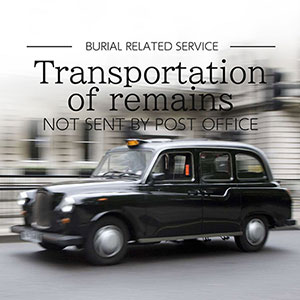
We offer a service where we collect your remains in a private vehicle, rather than mailing them. To conduct a natural burial, we must collect your remains and pulverize them beforehand. However, if you are reluctant to mail them, this service is available as an additional fee. Our 'Arrest Transportation' ・・・
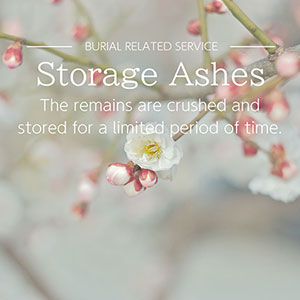
We offer a service for storing pulverized ashes. Our Ashes Storage Service allows you to store your ashes. This service is also available for those considering scattering but haven't yet reached a final decision, or for those unable to keep the ashes at home due to housing circumstances or family disagreements・・・
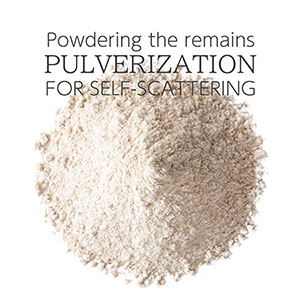
The [DIY Scattering Service Plan] is a plan that only handles the pulverization of ashes. This plan is for those who wish to scatter the ashes at a location of their choice or who wish to keep the ashes for personal memorial services. The service begins with the delivery of the ashes via courier. Once you have・・・
Otakiage is a ceremony in which the deceased's belongings, favorite items that the surviving family no longer plans to use, items related to gods and Buddhas, and photo albums owned by the deceased are purified and offered for memorial services. The body is cremated, and even after the funeral, it is no longer・・・・・・
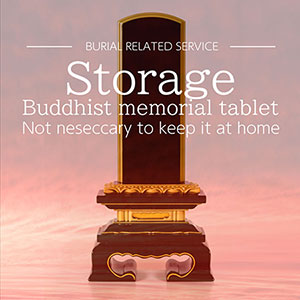
We advocate not keeping memorial tablets at home. Memorial tablets do not necessarily have to be kept at home. Traditionally, they are kept inside the Buddhist altar. The Buddhist altar is the home of the memorial tablet and serves as the temple's main hall. While an increasing number of families are opting・・・
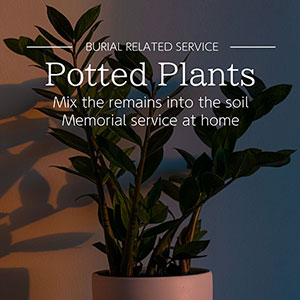
We offer a personal memorial service using a potted plant. This is also known as a "plant funeral," "planter funeral," or "potted plant funeral." This funeral method involves converting the ashes of a pet to ashes and burying them at the base of a potted plant, allowing the plant to grow while you・・・
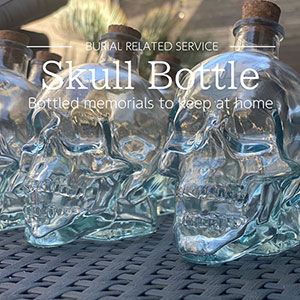
We offer a skull bottle memorial service. Ashes in a skull bottle complement stylish room decor. It can be a little awkward to leave ashes in an urn in your room. However, ashes are not something to be dreaded. Death should be a natural part of everyday life. We don't know whether a soul resides there・・・
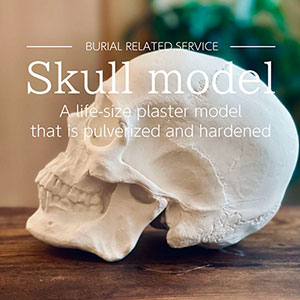
We offer a life-size skull model for home memorial services. Keeping cremated remains in an urn at home is permitted by law. In Japan, the number of people closing their graves and ending their ties with temples is on the rise. This decision forces people to choose between moving the remains to a new grave・・・
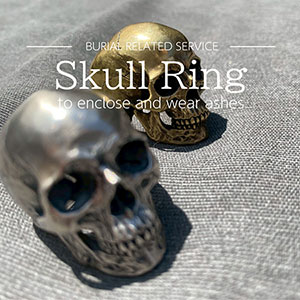
We offer cremation rings that can be worn at any time. Skull rings, which contain cremated remains, are stylish accessories. While skull rings are generally known as motifs symbolizing death and impermanence, they also carry positive meanings such as vitality, rebirth, and resurrection. Skulls symbolize the・・・
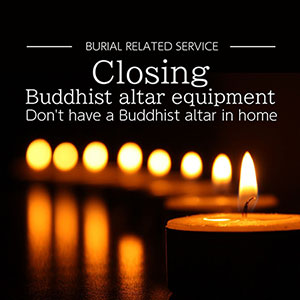
We propose not having a Buddhist altar at home. Many people are troubled by the fact that their Buddhist altar no longer fits their needs due to changing lifestyles. While the Buddhist altar is a uniquely Japanese culture, it serves as a smaller version of a temple's main hall. It originally spread to ordinary ・・・
[Grave Visit Proxy] is a service that visits the grave on behalf of the bereaved family. We will visit the grave according to your detailed requests, such as offering flowers, offering the deceased's favorite alcohol, and reading out any letters that you have entrusted to us. Of course, we will send you photos of the ・・・
We offer a private scattering area for your family and ancestors. Since you own the forest, you can visit the grave 24 hours a day, 365 days a year. Since it's not a cemetery, but a space for scattering ashes, you can use it freely. While gravestones are not permitted under the Cemetery an・・・
We offer a private ossuary for your family and ancestors. This plan allows you to use a regular detached house as your private ossuary. After closing your grave and dissolving your ties with the temple, you can prepare your own ossuary and freely visit the grave 24 hours a day, 365 days a year. In ancient ・・・
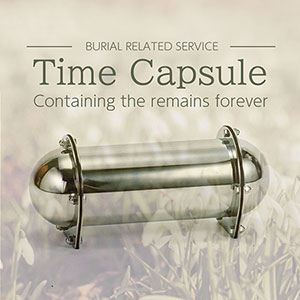
Time capsule burials are available. Important personal belongings and mementos of the deceased can be placed in a capsule and buried as burial goods. Time capsules are sealed with oxygen absorbers and desiccants, minimizing deterioration and discoloration of the contents and allowing them to be ・・・
We offer grave closure services. Grave closure refers to the dismantling and removal of existing graves, clearing the land, and returning the right of use. Grave closure is a rapidly increasing social phenomenon. According to the Ministry of Health, Labor, and Welfare, more than 110,000 grave closures were ・・・
We accept pre-bookings for natural burials. The cost of pre-booking varies depending on the age of the deceased at the time of application. The earlier you pre-book, the more economical the pre-booking. To apply for a pre-booking, you first submit a "special form" to confirm your wishes. This is a provisional ・・・
We offer venue rentals for farewell parties and memorial services. Our venue rentals are often used for pre-memorial farewell gatherings or family and friends gatherings. Recently, farewell parties have become more commonplace, not just for memorial services. Many people prefer more casual gatherings・・・
We offer support for pre-death sorting. Pre-death sorting involves sorting out your belongings and possessions while you're still healthy, preparing for the end of your life as part of your end-of-life planning. This reduces the burden on your surviving family and allows you to plan your inheritance and end-of-life in ・・・
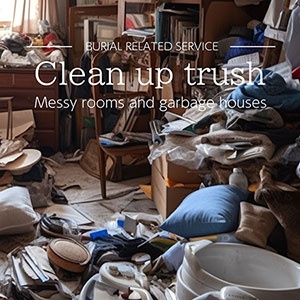
We offer comprehensive estate clearance services, including room cleaning, tidying, disposal of personal belongings, and the purchase of precious metals. Unwanted belongings include cupboards, gas stoves, dressers, tables, chairs, televisions, TV stands, dressing tables, Buddhist altars, clothing, refrigerators・・・
We offer leftover item removal services. We will dispose of leftover items appropriately. Leftover items such as combustible waste, plastics, bottles, and cans can be collected by garbage trucks. However, items such as appliances subject to the Home Appliance Recycling Law and large furniture that cannot・・・
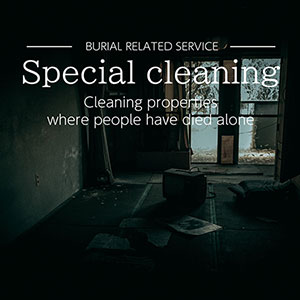
We offer specialized cleaning services. Specialized cleaning involves cleaning rooms that have become contaminated by the decay of a body and are difficult to clean with standard cleaning methods. This service removes blood and other body fluid stains, pests, and odors that cannot be addressed with standard・・・
We offer free consultations on inheritance tax returns and tax accountants. These individual consultations are available over the phone or in person at the funeral home, Kamakura Gokurakuji Temple. While free, these consultations require time, so please schedule a time in advance. Your consultation ・・・
We accept posthumous affairs delegation contracts. A posthumous affairs delegation contract is a contract that entrusts a trusted third party with posthumous affairs after the delegator's death. It's a form of pre-death preparation, allowing you to entrust a trusted third party with posthumous・・・
We purchase and salvage unwanted real estate. We offer high prices for valuable real estate. Conversely, many properties are difficult to dispose of. However, at SANKOTSUYAMA, we handle a wide range of properties nationwide, including vacant homes, forests, wilderness, miscellaneous land, vacation homes・・・
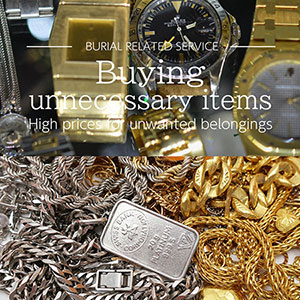
Among the belongings of the deceased may be valuable items, including rare antiques. Our company holds a secondhand goods license issued by the Public Safety Commission, allowing us to purchase such items at high prices. Many items, including precious metals and jewelry, as well as Buddhist altars and・・・
We offer pet adoption services for customers who make pre-death reservations. If something were to happen to your beloved dog or cat, we'll take them in and care for them as a new member of your family. We'll care for them so they can live happily as a family member for years to come. Of course, life ・・・
We offer plant collection for customers who make pre-death reservations. In the unlikely event of a death, we will collect and care for your cherished ornamental plants and garden trees. We have staff members who are relatively knowledgeable about plant cultivation, so we will observe the plant's previous ・・・
We have compiled a variety of information here, including information on natural burials with scattering of ashes, grave closures, and thoughts on gods and Buddhas. Whether you don't have a grave, are considering what to do with your grave, or already have one and have questions about reburial or grave closures, we hope you will gather as much information as possible. Please decide for yourself whether natural burial with scattering of ashes is right for you.
◆Natural burials are becoming more common around the world
Natural burials, using forests as cemeteries, are gaining popularity around the world. In Germany and Switzerland, a style of cemetery where remains are buried at the base of trees in the forest, rather than being built in the forest, is gaining popularity. In environmentally conscious countries, efforts to literally "return to the earth" rather than leaving monuments are rapidly gaining popularity. Because it preserves forests as they are, this burial method is gaining attention・・・
"Grave closure" refers to the removal of the headstone, the clearing of the grave site, and the return of the right to use it. Methods include moving the grave to another location or scattering the ashes, eliminating the cemetery that should be maintained in the first place. Grave closures have been increasing in recent years, often due to various social reasons. Reasons for considering grave closure include "having no relatives," "no one to inherit the grave,・・・
There are two main methods of scattering ashes: "ocean scattering" and "forest scattering." These differ depending on where the ashes are scattered. There is also "aerial scattering" and "space scattering," which can be further categorized into "helicopter scattering," "fireworks scattering," "balloon scattering," and "rocket scattering.""Ocean scattering" is currently recognized as the most popular method, but due to consideration for neighbors, scattering ・・・
◆The difference between tree burial and scattering ash in forest
The difference between scattering and tree burial is the form of the remains. In scattering, the remains are ground into powder and then scattered in the mountains, while in tree burial, the remains are placed in an urn and buried in the ground near a tree. Both are known as natural burials, but the difference lies in whether the remains are truly returned to the natural cycle or whether a tree is used in place of a tombstone or grave marker to create・・・
◆Scattering of ashes is basically a collective funeral
In the case of forest scattering, the ashes are entwined with the natural surroundings of the mountains and fields, so it is generally treated as a collective funeral in which everyone is interred together. This is exactly the same as for ocean scattering, but because of the idea of becoming one with nature, there are generally no private areas for each individual. Humans are originally products of nature, and it is believed that becoming one with nature is ・・・
What exactly does a "grave" mean in Buddhism? The concepts of "treating graves" and "treating remains with care" can be seen in ancient Egyptian and European ruins, dating back to before the introduction of Buddhism. This "remains worship" concept seems to exist worldwide. Some Buddhist sects continue to argue over whether their temples have stupas (reliquary towers) housing the Buddha's remains, as they claim they are the true deity. After the war, GHQ・・・
◆What happens if we don't take care of the remains?
With the recent rise in perpetual memorial services and the closing of graves, I looked into how Buddhism views the closure of ancestral graves. What happens if the remains are not treated with care? Will treating them carelessly bring about retribution? The bottom line is that how the remains are treated is completely irrelevant. Whether memorial services are held or sutras are recited... these things have absolutely no bearing on the original teachings of Buddhism.・・・
A grave is a place or structure where the body or bones of a deceased person are interred. One ancient form of grave in Japan is the kofun, a structure constructed by piling up earth between 250 and the 600s. More than 160,000 kofun remain from that time, demonstrating the dedication and energy of many powerful figures. The largest kofun is the Emperor Nintoku Tomb in Osaka. These powerful figures sought to express their power through their・・・
In Japan, cemeteries are built in accordance with the "Law Concerning Cemeteries, Burials, etc. (Grave Burial Law)," but there is no rule that a deceased person's remains must be interred in a grave. Of course, disposing of a body or burying it anywhere other than a cemetery is illegal, but scattering bones to return them to nature is permitted as long as certain rules are followed. It is also acceptable to keep the remains at home or elsewhere ・・・
◆The possibility of temples disappearing in the future
There is also concern that a declining population could put temple management at risk. Fewer parishioners mean fewer funerals and memorial services, and therefore fewer offerings. There is also a growing trend for people who live in cities to close their rural graves and move them to the city. This leads to the disappearance of rural temples, leading to the loss of family temples. Graves will no longer be maintained, and they will fall into further disrepair.・・・
◆The number of abandoned graves is rapidly increasing even in public cemeteries.
Graves that are abandoned because there is no one to take over are called "unclaimed graves," and these problems are occurring even in public cemeteries. A survey by the Ministry of Internal Affairs and Communications revealed that although there are abandoned "unclaimed graves" in public cemeteries across the country, there is little progress in sorting them, and local governments are struggling to deal with these issues. According to・・・
While scattering ashes is becoming increasingly popular, some people have regretted it. We've summarized the reasons for this. 1. The scattering location was inappropriate. When hiring a scattering service, the location is almost always decided at the service's discretion. It seems that people may regret scattering ashes at sea or if the scattering location is too far from their living area. It's fine if the scattering location is a place of memories or a favorite・・・
According to a 2020 survey conducted by the National Association of Excellent Stonemasons in Tokyo and three prefectures, public awareness of scattering of ashes has already reached 87%, demonstrating its status as a major funeral method. While only 2-3% of people have actually experienced or requested ashes scattering, approximately 50% are in favor of scattering ashes themselves or their family members in the future, and scattering ashes is expected to・・・
◆The difference between tree burial and eternal memorial service
Many people mistakenly believe that "tree burial" is the same as "perpetual memorial service," so let me explain a bit. "Perpetual memorial service" is a memorial service method in which a temple or cemetery manages and holds memorial services for the remains on behalf of bereaved family members who are unable to visit the grave. "Tree burial" is a grave where a tree is used as an object of worship instead of a tombstone, and is characterized by the・・・
◆The most popular option after closing a grave is "tree burial"
There are various options for interring the remains after a grave is closed, including regular graves, communal graves, ossuaries, tree burials, scattering of ashes, and memorial services at home. Of these, the most popular is "tree burial." Tree burials are popular primarily because they eliminate the need for grave heirs and are less expensive than tombstones. Tree burials also vary. There are communal tree burials, where the remains of unknown relatives are・・・
Recently, the number of people who think, "I don't need a funeral!" seems to be increasing. Funerals usually cost at least 1 to 2 million yen. The cost of a complete funeral includes the coffin, funeral supplies, altar, hearse/bed car, venue, service fees, and flowers. Food and beverage entertainment costs include the wake, food and beverages for the end of abstinence, funeral return gifts, and condolence money. Remuneration for religious figures includes offerings・・・
The question of "What happens after death" has differing views across religions. I would like to explore the perspectives of Christianity, Islam, Japanese Shinto, materialism, and Buddhism. Christianity believes that each and every one of us was born by God's will. The Bible states that all people were created by God's will. In the Christian worldview, we are born, live, and eventually die. We are then buried, and after a certain time, we will face God's "Final・・・
The average cost of closing a grave is generally estimated to be between 200,000 and 3,000,000 yen. The cost of closing a grave can be broadly divided into two components: the cost of removing the existing grave and the cost of purchasing a new grave. First, the cost of removing the existing grave will likely total between 100,000 and 300,000 yen. First, you'll need to obtain a "reburial permit" from the city, town, or village where the remains are located,・・・
◆How many degrees of kinship can be buried in a grave?
Cemeteries and graveyards, whether public or private, each have their own management regulations. Generally, they allow the interment of ashes of relatives within the sixth degree of kinship from the owner. Six degrees of kinship broadly encompasses cousins and great-grandchildren. Japan once had a system in which the eldest son inherited the family estate. This system was based on the idea that the eldest son inherited everything. Article 970,・・・
Many cemeteries do not allow humans and pets to be buried in the same grave. This is not the case for all cemeteries, but why do pets and humans not share the same grave? What are the reasons? What should you do if you want to be buried in the same grave as your pet? For pet owners, after the death of a pet who has lived with you as a family member, it is natural to want to bury them in the same grave as you, in the same grave as your family. Even if they look・・・
◆The story goes that Buddha was an animal before he was born.
I'd like to briefly touch on the Buddha's past life. Many Buddhist scriptures contain stories about animals such as cows, elephants, birds, and insects. Among these, the Jataka tales, is one about a cow. Once upon a time, an old woman lived in a village near Varanasi, the capital of the Kashi kingdom in central India. One day, a traveler stayed overnight at the old woman's house, but he had no money, so he left a calf in return. The old woman, living alone, loved the cow・・・
◆For those who don't want to be separated from their deceased pets
Owners are free to do whatever they want with their pet's body and ashes. Since there are no legal restrictions, I think it's truly a free choice. Every person is different. There are as many ways of thinking as there are people, and many people will try to force their way of thinking on others, thinking it's for the better. This can often cause us to feel anxious and uneasy. It's natural to have different ways of thinking, and society is essentially about accepting and coexisting・・・
Grave goods are a "final gift" to the deceased. While the term "grave goods" is often used today to refer to items placed in the coffin with the body during cremation, you may have heard of burial goods dating back thousands of years. These items were buried with the deceased because they were thought to be necessary for mourning or for survival in the afterlife. They are not simply objects; they contain the deep feelings of those who cherished・・・
Did you know that when Buddhism first emerged, there were no statues of Buddha? It is also known that Buddha himself forbade the worship of idols. This was because he believed that humans have a tendency to become attached to visible things. In Buddhist thought, attachment = worldly desires, and shedding attachment is the path to enlightenment. He feared that if an idol of Buddha himself were made, people would simply worship the idol rather than uphold・・・
The term animism was first coined by British cultural anthropologist Edward Tylor (1832-1917). He used the term in his book "Primitive Cultures" in the late 19th century to describe the characteristics of "primitive religion." Animism is a "spiritual culture" that holds that all natural objects possess souls. It posits that gods reside in everything that exists in the world, from the sun, moon, and wind to all phenomena, and even in learning and commerce. The term,・・・
The practice of confining remains in dark concrete holes rather than returning them to the earth is one problem with modern graves. Modern graves are designed to ensure that they never return to the earth. Placing a ceramic urn containing ashes in a concrete ossuary (columbarium) means that the bones retain their shape even after 100 years. When bodies are interred, not only the body but also the bones often return to the earth, demonstrating that bones・・・
Abandoning remains without permission is a violation of the law and is punishable by law. Article 4 of the Cemetery and Burial Act stipulates that burials and cremated remains must not be carried out in areas other than cemeteries. Therefore, remains must be interred in a permitted location. Private individuals are not permitted by law to create cemeteries in their own yards or other areas. Throwing remains into the garbage or leaving them in a public place is・・・
While burial is not prohibited by law in Japan, it does require special permission. Article 5 of the "Cemeteries, Burials, etc. Act" states, "Permission from the mayor of the city, town, or village must be obtained as prescribed by Ministry of Health, Labor, and Welfare Ordinance." Therefore, to conduct a burial in Japan today, a "burial permit" must be obtained from the mayor of the city, town, or village. Currently, obtaining a burial permit appears・・・
Eternal memorial services involve cemeteries, temples, and other institutions managing and maintaining the remains on behalf of surviving family members and descendants. Leaving the management and maintenance of remains entirely to the cemetery or temple reduces the hassle. While traditionally used as a memorial service for those without relatives or heirs, an increasing number of people are choosing this option for reasons such as・・・
◆Funeral home bankruptcy and social media memorial accounts
Funeral home bankruptcies are occurring one after another across the country. The reality is that local funeral homes are going bust across the board. The proportion of elderly people in the total population has been steadily increasing since 1950 (4.9%), reaching 10% in 1985, exceeding 20% in 2005, and reaching a record high of 29.1% in 2023. According to vital statistics, the population aged 65 and over is 35.89 million. Despite the aging populatio・・・
While some cemeteries are popular, others are experiencing a surprising lack of user growth. Recently, there has been an increase in the number of people choosing to offer perpetual memorial services and not build a grave. Perpetual memorial services offer the benefit to consumers of not having to pay annual maintenance fees like regular graves. However, just like ordinary companies, cemeteries and ossuaries can go bankrupt. If a cemetery or graveyard・・・
In Buddhism, a "kaimyo" (posthumous Buddhist name) is a name given to a deceased person after death. The name written on most memorial tablets is a kaimyo. In some cases, a person's secular name is written on the memorial tablet. It seems that giving a kaimyo to the deceased was originally intended to ensure that they would be able to reach the Pure Land without getting lost. The reason for renaming the deceased after death is that after death, they will ente・・・
"Do I need to make an ihai?"... To get straight to the point, an ihai is not absolutely necessary. However, if you plan to pray at home and pray over the ihai, it may be a good idea to have one. Even if you choose a permanent memorial service for your grave, whether or not to have one is a separate issue. In fact, it seems that many people who choose permanent memorial service do not make an ihai. The ihai is usually placed in the Buddhist・・・
Of course, memorial portraits didn't exist in the days before photography. Memorial portraits only appeared after the war. It's a custom that became widespread after World War II. Therefore, there are no provisions in Buddhist teachings regarding the handling of memorial portraits. Even if you ask a temple priest, you'll only be given their own personal opinion, and that opinion does not necessarily represent Buddhist teachings. Naturally, opinions will vary dependin・・・
If it is difficult to transport the remains yourself, you can send them by mail. It is not illegal to send ashes within Japan. Sending ashes by mail is called "sōbō." The handling of ashes is clearly stated in the "Law Concerning Cemeteries, Burials, etc." The only illegal acts are sending ashes overseas and disposing of uncrushed ashes on private property. The post office will handle ashes via "Yu-Pack." Yamato Transport and Sagawa Express do not handle ashes. Currently, ・・・
Many people seem to be struggling with household issues where their Buddhist altar no longer fits their needs due to changing lifestyles. While the Buddhist altar is a uniquely Japanese culture, it serves as a smaller version of a temple's main hall. It originally spread to ordinary households during the Edo period, when the Danka system was implemented in response to the ban on Christianity. Even earlier, there were different customs. During the Heian period, aristocrats・・・
◆Religious beliefs and ancestor worship are separate things
Although Japan is considered to have a high proportion of non-religious people, a survey conducted in Japan's Religious Views found that 94% of people respect their ancestors, indicating that many people cherish them. We all know that without our ancestors, we wouldn't exist. It's an undeniable fact that deceased ancestors influence their living descendants. This type of ancestor worship is prevalent throughout the world. Ancestor worship is widespread・・・
While Obon in Japan is known as a Buddhist festival marking the return of the dead, the idea that the dead return is quite rare worldwide. Buddhist countries have a ritual called "Uan-go-aki" (End of Rainy Days). However, this ritual does not refer to the day the dead return. Theravada Buddhist doctrine also does not include stories of ancestral spirits returning. Japan's Obon festival was influenced by China's Qingming Festival and is a blend of ancestor worship rituals・・・
In recent years, new methods of memorial service have emerged, such as tree burials and scattering of ashes. While the word "kuyo" originally comes from Buddhism, in Japan it is often understood as simply offering prayers for the deceased. However, the form of memorial service commonly practiced in Japan today is a combination of cultural and religious elements. The idea that visiting graves during Obon or Higan (the Japanese equinox) to feel the presence of the ・・・
There are five Tibetan burial methods: tower burial, cremation, sky burial, water burial, and earth burial. ・Tower Burial Tower burial is the most honorable of the five burial methods. Also known as "spirit burial," this ritual is reserved for a select few aristocrats. In tower burial, the body is placed in a "spirit burial tower." Tower burials are reserved for popes such as the Dalai Lama and Panchen Lama, as well as living Buddhas. The body is placed in a magnificent・・・
◆Scattering ashes has been a tradition in Japan since ancient times
While scattering of ashes is often thought of as a new memorial service method, its history actually dates back to Japan's Nara period. The burial method of scattering ashes in the mountains is the simplest way to return to nature, as the saying goes, "When we die, we return to the earth." In fact, the modern practice of burial in a grave is actually more recent. Scattering of ashes is said to have originated in India, where Buddhism was born, and is actually・・・
◆The story of Emperor Junna's ashes being scattered in the mountains
The Heian period history book Shoku Nihon Kōki (Volume 9) records that Emperor Junna (the retired emperor), who passed away in 840, requested that his ashes be scattered, and that he was cremated and then scattered at the summit of Nishiyama in Oharano. By order of Emperor Junna (the retired emperor), his body was cremated and then scattered at the summit of Nishiyama in Oharano (Oharano Minami Kasuga-cho, Nishikyo Ward, Kyoto City, Kyoto Prefecture)・・・
◆The first emperor to be cremated was Empress Jitō.
Empress Jitō (645-702, died at age 58) was the first emperor to be cremated. She was the third female emperor in the history of the Imperial family. Her father, Prince Nakano Oe, carried out the Taika Reforms. She established the foundations of Japanese politics by enacting the Ritsuryo Code, establishing the family registry, and building a proper capital. She moved the capital to Fujiwara-kyō, and the Taihō Code of 701 was Japan's first proper legal code. ・・・
There are waka poems in the Manyoshu that show that scattering ashes has been a tradition in Japan since ancient times. These poems beautifully describe the feelings felt when scattering ashes. The younger sister of Tamakamoashi is scattered on the pure mountainside of Ashihiki. The younger sister of Tamazusa is a flower, and if you sow it in the shade of the mushrooms, it will disappear. This poem by Yomitanishi expresses the feelings of the poet upon・・・
While scattering ashes was common in Japan from the Nara period onward, its gradual decline is thought to be largely due to the Danka system, which was implemented as part of the Edo Shogunate's policy of religious control. Under the Danka system, all funeral and memorial services were the responsibility of each individual's temple. Regular worship and memorial services were made mandatory, strengthening the authority of temples. The practice of interrin・・・
Many world-famous stars, famous figures, and cutting-edge celebrities have chosen scattering of ashes as a method of burial. Mahatma Gandhi, known as the father of Indian independence Albert Einstein, the physicist famous for his theory of relativity Friedrich Engels, the socialist political thinker Zhou Enlai, the Chinese politician Deng Xiaoping, the Chinese politician Adolf Eichmann, the commandant of Auschwitz concentration camp Hermann Goering, the German politician・・・
The main benefit of scattering ashes at sea is its cost-free operation. It's generally said that building a grave costs around 2 million yen. A funeral is also said to cost about the same, so initial costs are substantial. In contrast, scattering ashes at sea is said to cost about one-tenth of that. The cost of scattering ashes at sea varies considerably depending on the size of the boat chartered and the number of people traveling. In other words, the cost varie・・・
◆List of mountain scattering companies and scattering locations
In addition to the "SANKOTSUYAMA" operated by our company, Touisha, there are other companies offering mountain scattering services, so we have compiled a list. We have also included phone numbers so you can contact them directly. While there are many companies offering marine scattering, there are not many offering forest scattering. While many services include the fee for powdering the ashes, if this fee is not included, you may be charged separately. ・・・
In Shinto, it is believed that gods reside in all things, and that gods exist in every phenomenon. As the phrase "eight million gods" suggests, it is believed that gods reside in all natural phenomena. Mountains and other natural features are also objects of worship, and disasters are sometimes deified. There are many cases in which powerful figures or those who died with grudges are worshiped as gods to protect them from curses. The Shinto view of life and・・・
◆Research into thanatology at the University of Tokyo
How often do you think about death in your daily life? Humans are mortal. We usually live without being conscious of this. We are all destined to die, but when we're healthy and busy with our daily lives, we sometimes fail to acknowledge this fact. It's understandable that we don't want to think about it until we're faced with an imminent situation. However, isn't this an escape from the "truth" of being alive? This is evidenced by the fact that when the thought of death rears・・・
Currently, municipal offices and other local governments do not offer free collection of cremated remains. However, disposing of them with regular garbage or leaving them in a public place is considered a crime of "abandoning remains." Some local governments allow crematoriums to refuse collection of remains before they are cremated. While the general rule is that the family should collect the remains at the crematorium, if collection is absolutely impossible・・・
SANKOTSUYAMAa offers natural burial scattering services throughout Japan. Simply send your remains via Yu-Pack from your local post office, and we'll handle everything from pulverizing the ashes to scattering them and issuing a certificate. We'll also take photos of the scattering on the day and send them to you for review. Sankotsuyama offers forest scattering, ocean scattering, and at-home memorial services. Once you've completed the grave closing process, please send the remains to us and we'll handle the process responsibly. Grave closing can be completed immediately by contacting a stonemason. We have a map of stonemasons by area, so please feel free to use it.
Natural Burial in Japan
FOREST SCATTERING PLAN
OCEAN SCATTERING PLAN
For inquiries or questions about natural burial scattering at Scattered Bone Mountain, please contact us by phone, email, or visit us for a free in-person consultation. We will provide detailed explanations about scattering ashes, which is still uncommon. We welcome any questions or concerns you may have until you are satisfied. Please feel free to discuss any details, such as closing the grave or making pre-planning reservations. If you feel you can avoid the hassle of visiting our office, please feel free to ask us questions via email. If you are in a hurry, please submit your scattering request directly. The data you submit through the application form will not be used for any other purpose, so please feel free to provide your information. Please note that submitting the application form is a provisional request; your formal request will be finalized once payment has been confirmed. We will also ask for the name of the deceased, so please submit your request using the dedicated scattering request email form.